
Enlightenment within The Cave
The root of every story’s change is determined by the protagonist’s decisions in the beginning of the story, versus the end of the story. That transformation isn’t automatic. The main character must recognize their initial desires from the start. As the story unfolds, the protagonist is forced to make decisions, do to conflict, and slowly begins to recognize their personal philosophies aren’t serving them well. This deep contemplation is done is the quiet of your main character’s mind, called the Cave.
What is the Cave?
The Cave is the place, the moment, when the protagonist’s authentic story unfolds. It is where she will recognize her past mistakes, her flaws, all the voices that told her she was never worthy of this adventure. Her mind’s eye casts images of her worst fears. Her biggest foe isn’t the villain himself. In actuality, the villain pushes all of the protagonist’s insecurities to the surface. It is her choice to move forward and face the fear, or wade in her own self-deprecation.
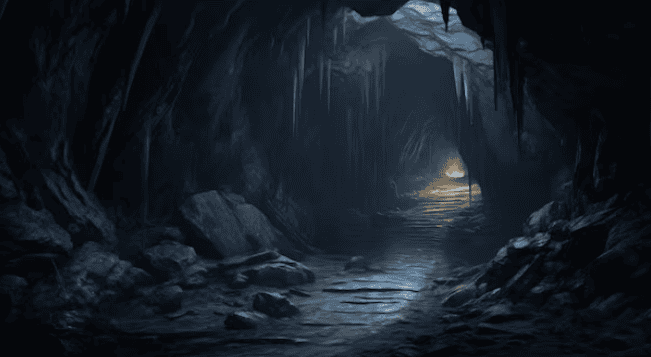
The Threshold of Entering the Cave
Here, the main character stands at the doorway contemplating whether she wants to face her biggest fears and hardest challenge, or turn around with her tail between her legs and try to find her way home having changed nothing. The latter makes for bad storytelling.
Hint: Go with facing fears.
In this scene, the main character tries to justify why they should stay safe outside the cave. They come up with more than their share of excuses, determines the place dangerous, and hesitates. Once they admit their surface-level fear, they gain confidence to move forward, knowing that they must face the conflict.
The cave opens its darkened interior and the protagonist enters.
But darkness is scary.
The protagonist can’t see her own hand in front of her face. Creepy noises come from every direction. There is banging, scratching of walls, and voices telling her that she doesn’t belong here, to turn around, to run. She is at her most vulnerable stage and here in the shadows, she also holds her most powerful tool—her mind.
Inside the Cave
The protagonist’s inner wound is far more difficult to ignore in the dark. Use this scene to show your readers why the main character has been running from the truth and hiding behind toxic traits for the first two-third’s of the story. Something inside the cave, whether a symbol, a creature, a voice, or another person, is the seed of transformation, or change. This seed shows what she’s hidden, suppressed, and avoided for most of her life.
Death is a symbol of the transformation of your protagonist.
When we look at fear as nothing more than suppressed energy that exposes the truth, then the protagonist can face her demons, her shadow, her flaws, and trauma head on. It is in the darkness that she finds herself and gains the confidence of foresight and knowledge.
Assuming she relinquishes control over past misbeliefs, she willingly recognizes all the emotions, toxic traits, and destructive attributes that once ruled her way of moving through life and makes the choice to allow a piece of her to figuratively die.
Death is a new beginning and your protagonist is ready for battle.
Writing Prompt:
Practice writing your protagonist’s Cave scene and answer these questions.
When the moment the forces them to confront this truth, how will they accept it and change?
- What is the surface-level fear that stops them from entering the Cave?
- What have they been avoiding?
- How will they recognize their past fears are holding them back?
- What will they find in the Cave that represents the truth of bag of lies they’ve been carrying around for the first two-third’s of the story?
Happy Writing,
-RADolence